



Skills That Actually Matter in 2026: What the Event Industry is Looking For
The event industry has changed dramatically over the last few years. Today, success is no longer defined by how well someone can follow a checklist or manage a schedule. Events have become larger, more experiential, more technology-driven, and more focused on audience engagement than ever before.
As the industry evolves, so do the skills it demands.
Many students enter the field believing that event management is only about organizing events. In reality, it is about managing people, solving problems, building experiences, and making decisions in environments that are constantly changing. The professionals who thrive in 2026 are not necessarily the ones with the longest resumes. They are the ones who can adapt, communicate, and execute effectively when it matters most.
Communication Will Always Be the Foundation
No matter how advanced technology becomes, event management remains a people-driven industry.
Every event involves clients, vendors, sponsors, artists, attendees, production teams, and stakeholders. The ability to communicate clearly and confidently with different people is one of the most valuable skills a professional can possess.
Communication is not just about speaking well. It is about listening carefully, understanding expectations, managing conversations, and ensuring that everyone involved is aligned toward a common goal.
In many cases, successful events are built on strong communication long before they are built on strong logistics.
Problem Solving Under Pressure
Events rarely go exactly as planned. Timelines shift, weather changes, equipment fails, and unexpected situations arise without warning. What separates an average event professional from an exceptional one is not the ability to avoid problems, but the ability to respond to them.
The industry values individuals who can stay calm under pressure, assess situations quickly, and make effective decisions without creating panic around them. In an environment where every second counts, problem-solving becomes more than a skill. It becomes a necessity.
Creativity That Serves a Purpose
Creativity has always been associated with events, but in 2026, it is expected to go beyond aesthetics. The industry is looking for individuals who can think creatively while understanding practical limitations. Creative ideas need to be relevant, executable, and aligned with audience expectations.
Whether it is designing an event concept, creating audience engagement strategies, or finding innovative ways to solve challenges, creativity plays a major role in creating memorable experiences.
The best event professionals understand that creativity is not about being different for the sake of being different. It is about creating meaningful impact.
Adaptability in a Fast-Changing Industry
The pace of change in the event industry has accelerated significantly.
Technology evolves, audience expectations shift, and new event formats continue to emerge. Professionals who resist change often struggle to keep up, while those who embrace it continue to grow.
Adaptability has become one of the most valuable qualities employers look for. The ability to learn new tools, work with different teams, and adjust strategies when circumstances change is what allows professionals to remain relevant.
In many ways, adaptability is what future-proofs a career in event management.
Understanding Technology and Digital Experiences
Events today are no longer limited to physical venues. Hybrid events, virtual experiences, event technology platforms, audience analytics, digital engagement tools, and AI-powered solutions are becoming increasingly common across the industry.
While technology may not replace human creativity, professionals who understand how to use it effectively will have a significant advantage. The future belongs to individuals who can combine human connection with technological understanding.
Leadership and Team Coordination
Every successful event is the result of teamwork. Regardless of the size of the event, professionals often find themselves coordinating multiple teams, handling different stakeholders, and ensuring that everyone works toward the same objective.
Leadership in event management is not always about authority. It is about responsibility, accountability, and the ability to guide people through challenging situations.
The industry values individuals who can inspire confidence, maintain clarity, and bring people together when deadlines are tight and expectations are high.
Emotional Intelligence Matters More Than Ever
Technical skills can be taught. Emotional intelligence is what often determines how effectively those skills are applied.
Understanding people, managing relationships, handling difficult conversations, and remaining professional under stress are qualities that have become increasingly important.
Events are built around human experiences. Professionals who understand emotions, expectations, and interpersonal dynamics often create stronger relationships and deliver better outcomes.
In an industry driven by people, emotional intelligence is a competitive advantage.
How GIEM is Preparing Students for the Future
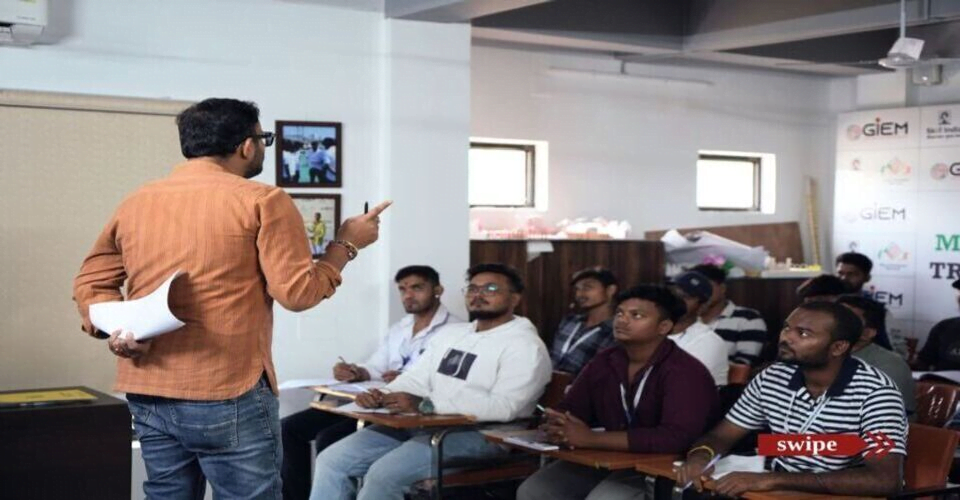
At the Global Institute of Event Management (GIEM), we recognize that the event industry is evolving rapidly. The skills required today are very different from what the industry demanded a decade ago.
That is why our approach goes beyond traditional classroom learning. We focus on developing practical capabilities alongside theoretical understanding.
Students are exposed to real-world scenarios that help them build confidence, improve decision-making, strengthen communication, and understand the realities of the profession.
Our goal is not simply to educate students about event management. Our goal is to prepare professionals who can thrive in the industry they are about to enter.
By combining industry exposure with skill development, GIEM ensures that students are ready for the opportunities and challenges that define modern event management.
Looking Ahead
The event industry of 2026 is looking for more than organizers. It is looking for communicators, problem-solvers, creators, leaders, and adaptable professionals who can navigate a constantly evolving landscape.
Technical knowledge will always matter, but it is these human skills that will set individuals apart.
As the industry continues to grow, the demand for capable professionals will only increase. Those who invest in developing these skills today will be the ones shaping the events, experiences, and innovations of tomorrow.
At GIEM, that future is already being built.
Conclusion
The event industry in 2026 is looking for professionals who can do more than manage logistics. Strong communication, adaptability, creativity, leadership, and problem-solving skills are becoming just as important as technical knowledge.
By developing these capabilities early, aspiring event professionals can position themselves for long-term success. At GIEM, students gain the practical skills and industry exposure needed to thrive in the fast-changing world of event management.